A Client-trusted Partner of Global Timble Supply Chain


When choosing affordable materials for home decoration, do you know the characteristics, disadvantages and grades of particleboard?
Release time: 2025-10-08


Particleboard, also known as "chipboard", is a type of artificial board made by pressing wood chips, sawdust, bark and other wood waste materials together with adhesives under high temperature and pressure. It is a cost-effective basic board in home decoration and furniture industries, widely used in non-load-bearing parts such as the back panels of wardrobes, cabinet bodies, and TV stands. It is also often used as a base material for laminating melamine paper or wood veneer. Understanding the advantages and disadvantages of particleboard and its grade positioning can help consumers balance cost and demand when choosing materials for decoration.
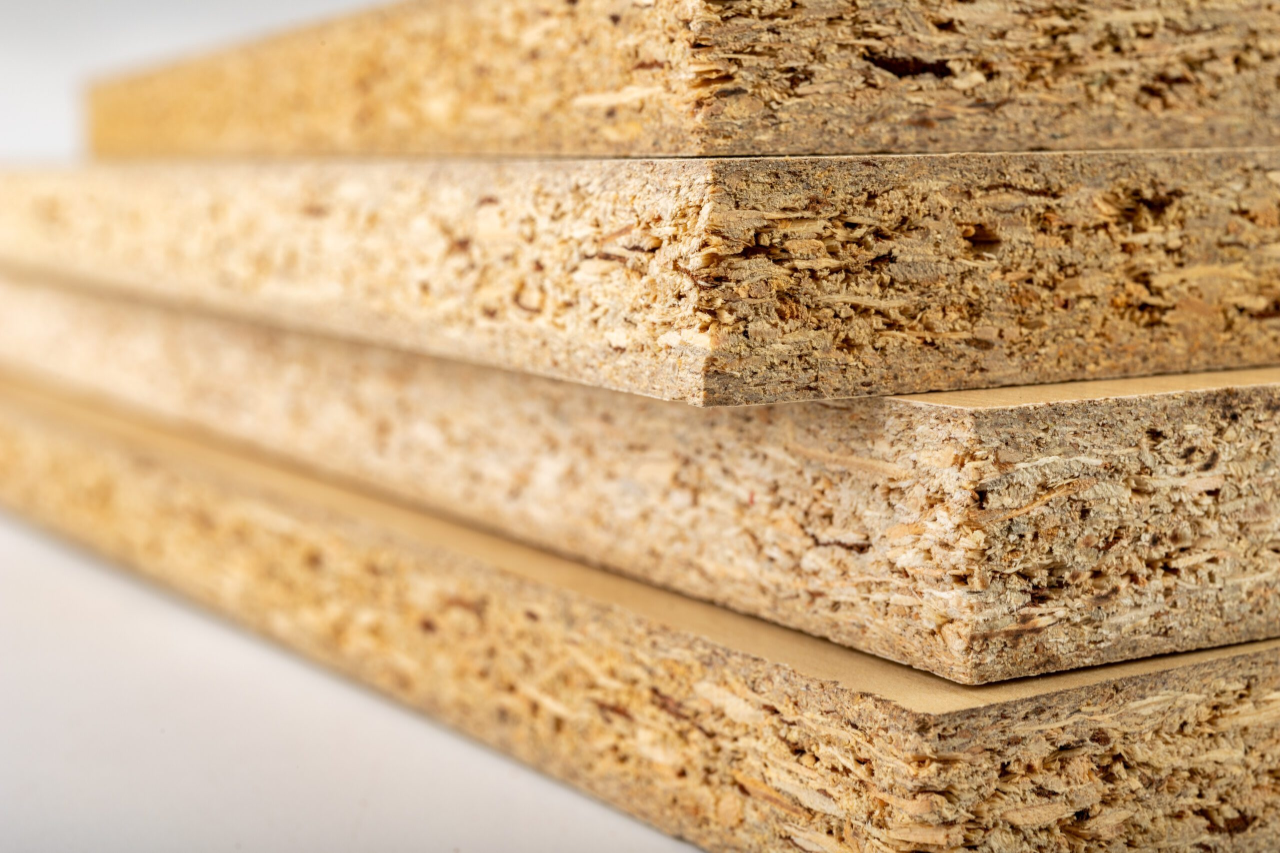
From the perspective of advantages, the core strengths of particleboard lie in its economy and practicality: Firstly, it is affordable. The raw materials are wood chips, which fully utilize wood resources and have a low production cost. The price of each sheet (1220mm×2440mm) is mostly within the range of tens to hundreds of yuan, far lower than that of solid wood boards and blockboards, making it suitable for families with limited budgets or large-scale decoration projects. Secondly, the material is uniform and stable, without the directional differences in the texture of natural wood, and has a low shrinkage rate. The furniture made from it is less prone to cracking and deformation, especially suitable for components that require a smooth surface. Thirdly, it is easy to process. The boards have a high degree of flatness and are easy to saw, drill, and firmly attach decorative surface materials, meeting the diverse appearance requirements in modern home decoration. Fourthly, its environmental friendliness is controllable. Particleboard produced by regular manufacturers mostly uses environmentally friendly adhesives, and the formaldehyde emission can reach E0 and E1 standards, meeting the requirements for indoor use.
However, particleboard also has obvious shortcomings: first, it has relatively low strength. The structure of wood chips makes it have poor nail-holding capacity. Repeated disassembly or installation of screws can easily cause the board to become loose, making it unsuitable for load-bearing parts. Second, it has poor moisture resistance. The board has strong water absorption. If it is in a humid environment for a long time (such as under the kitchen sink or near the bathroom), it is prone to swelling and mold, and moisture-proof treatment or moisture-proof particleboard should be selected. Third, it has a weak texture. The surface needs to rely on decorative materials to be pasted. It does not have the natural wood grain texture and the grade is lower than that of solid wood or multi-layer solid wood boards. Fourth, the quality varies greatly. Some small factories use inferior adhesives or recycled wood chips, which may have problems such as non-compliance with environmental standards and insufficient strength. Careful selection is needed when purchasing.
In terms of wood grades, particleboard belongs to the low-end category of artificial boards. Its price is lower than that of fine woodwork boards and multi-layer solid wood boards, and it is one of the artificial board types with the lowest cost. With its extremely low price and stable performance, particleboard has become the mainstream choice for affordable furniture and basic decoration, especially suitable for non-load-bearing parts where strength and texture requirements are not high. It is the preferred choice for consumers pursuing the best cost performance and is also a commonly used base material for furniture factories to mass-produce affordable products.
- END -
Disclaimer: The content of this article is sourced from public websites or the internet, solely for the purpose of conveying more information. It is not for commercial use and does not represent the position of our company. It does not constitute any investment advice. The text and images are copyrighted by their respective authors. If there are any errors in the source attribution or if it infringes upon your legitimate rights and interests, please contact us and we will promptly correct or delete it. If you have any questions you would like to discuss, please feel free to leave a comment in the comment section.
Keywords:
More Blogs

Cameroon: No Expansion Planned Without Clear Improvement in Timber Demand
Contact
Address
Unit 1405a 14/F, The Belgian Bank Building, Nos. 721-725 Nathan Road, Mongkok, Kln, Hong Kong