A Client-trusted Partner of Global Timble Supply Chain


African olive wood review: Hard, wear-resistant but with limitations
Release time: 2025-09-30


African olive, also known as "African oil olive", mainly grows in the tropical savanna regions of Africa. It is a high-quality hardwood with both hardness and stability. Its wood properties are balanced, and the texture is unique. It is widely used in furniture manufacturing, flooring, and other fields. At the same time, it has significant advantages and disadvantages.
The advantages of African olive are very obvious. First, the material is hard and dense, with an air-dry density of about 0.7-0.9g/cm³. It has excellent compressive strength and wear resistance. The furniture and flooring made from it can withstand long-term use without deformation or damage. Secondly, the heartwood of the wood is light brown to dark brown, and the texture is mostly straight or oblique, with some having unique water wave patterns. The structure is fine and uniform. After grinding and coating, it has a soft luster and can show a low-key and stable decorative effect, suitable for various decoration styles. In addition, it has strong corrosion resistance and outstanding natural resistance to insect damage. It can maintain a good state in a humid environment and has a long service life. At the same time, its processing performance is moderate. The surface is smooth after planing, and it has good nail and glue performance, making it easy to carry out fine processing.
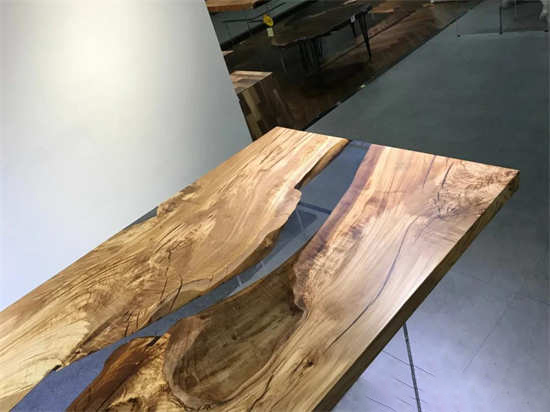
However, African olive wood also has certain drawbacks. Due to its high density and weight, it is relatively difficult to transport and install, which imposes certain physical and technical demands on construction workers. Secondly, the drying process requires precise control; otherwise, cracking may occur, increasing the initial processing costs. Moreover, high-quality large pieces are relatively scarce, and some boards may have natural defects such as knots and twisted grains, which requires more effort to select quality materials. Additionally, as an imported hardwood, its market price is at a medium to high level due to transportation from the origin and environmental policies, making it less cost-effective for consumers with limited budgets.
In terms of wood grade positioning, African olive wood is a mid-to-high-end practical hardwood. It is widely used in high-end furniture, solid wood flooring, and interior decorative panels due to its excellent physical properties and unique decorative effects. Compared with top-tier woods like rosewood and walnut, it is more affordable; but compared to common hardwoods like rubber wood, it has superior hardness, decay resistance, and decorative appeal, making it an ideal choice for those seeking a balance between quality and cost-effectiveness.
African olive wood has established a niche in the mid-to-high-end hardwood market with its stable performance and unique grain patterns. Despite issues such as heavy weight, high drying requirements, and relatively high prices, its durability and decorative qualities are still recognized by the market. For consumers who value quality and natural aesthetics, it is a high-quality wood that combines practical and aesthetic value, demonstrating a unique competitive edge in mid-to-high-end solid wood applications.
- END -
Disclaimer: The content of this article is sourced from public websites or the internet, solely for the purpose of conveying more information. It is not for commercial use and does not represent our position. It does not constitute any investment advice. The text and images are copyrighted by their respective authors. If there are any errors in the source attribution or if your legitimate rights and interests are infringed upon, please contact us and we will promptly correct or delete the content. If you have any questions you would like to discuss, please feel free to leave a comment in the comment section.
Keywords:
More Blogs

Cameroon: No Expansion Planned Without Clear Improvement in Timber Demand
Contact
Address
Unit 1405a 14/F, The Belgian Bank Building, Nos. 721-725 Nathan Road, Mongkok, Kln, Hong Kong